People
@EmbodyingAI
FollowKeep up to date with our latest updates on X
Director

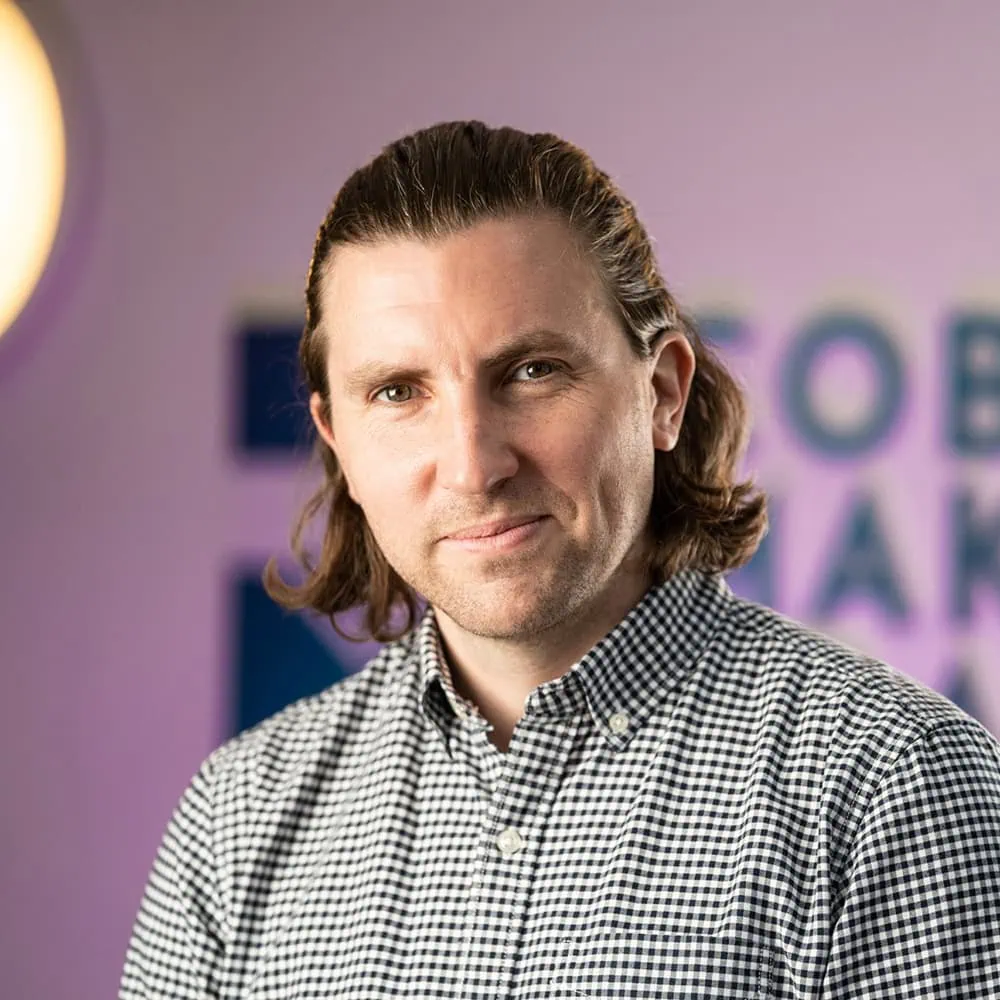
Steve Benford
Professor of Computer Science at the University of Nottingham’s Mixed Reality Laboratory and a UKRI Turing AI Fellow.
My research explores the design of interactive experiences that provoke human meaning making. My approach is to collaborate with artists to create, tour and study artworks from which I generalise new concepts, methods and tools. Technically, my research encompasses and interweaves AI, robots, and mixed reality. I am currently working on a five year UK Turing AI Fellowship on “Somabotics: Creatively Embodying Artificial Intelligence”.
Academics

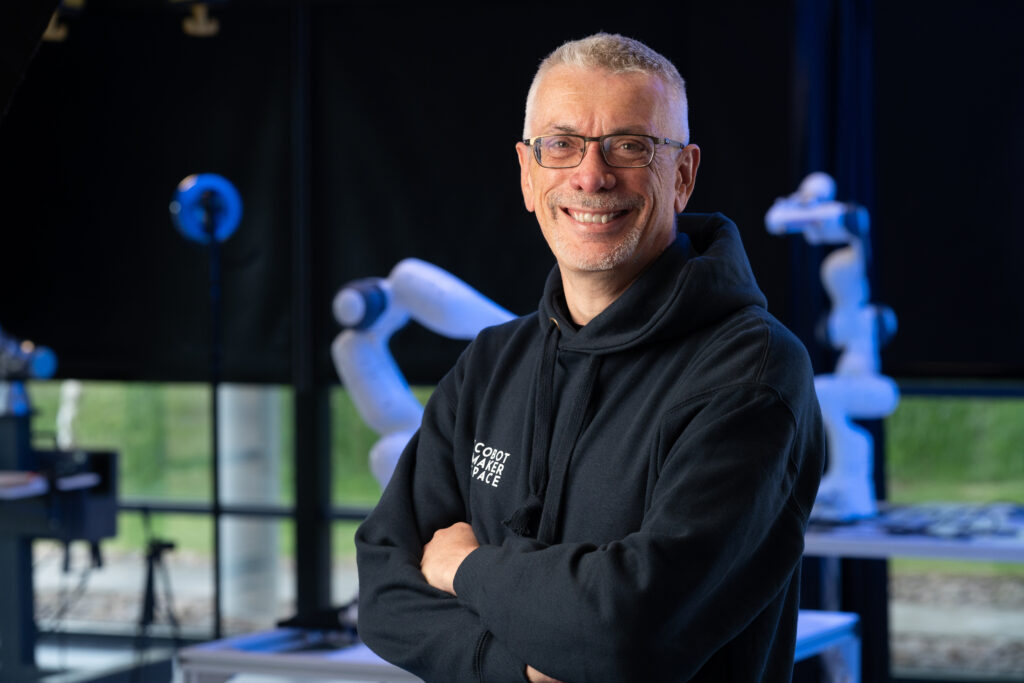
OLYMPUS DIGITAL CAMERA Luis Figueredo
Assistant Professor
Luis holds an awarded PhD thesis from the Univ. of Brasilia. During his thesis, as a visiting researcher at the Massachusetts Inst. of Tech. (MIT), he also received multiple robot demo awards, e.g., at IROS and ICAPS. In 2018, he was awarded the prestigious Horizon-MSCA-IF, and became a pioneer in biomechanics-aware manipulation planning with open-source AI tools acknowledged by the EU Innovation Radar. Recently, he was also recognized within the IEEE ICRA New Generation Star Project. Dr. Figueredo is also an Associated Fellow at the Technical University of Munich (TUM). With a robust interdisciplinary background, he contributes to the fields of physical human-robot interaction (pHRI), multimodal and biomechanics-aware manipulation, AI grounding for robotics, and geometric methods and control for robotics.Juan Martinez Avila
Assistant Professor in Computer Science
As part of the Mixed Reality Lab, Juan steers an interest group that investigates intelligent and interactive music technology research through practice-based methods, design ethnography, participatory design, and soma design .
Ayse Kucukyilmaz
Associate Professor of Robotics and Autonomous Systems
Ayse's research interests include haptics, human-robot interaction (pHRI), assistive robotics, and machine learning. Her team primarily works in building adjustable autonomy paradigms to enable dynamic switching behaviours between different levels of robotic autonomy (e.g. full human control vs. full autonomy) during shared/traded control of a physical task, enabling effective human-autonomy teaming.Gisela Reyes Cruz
Transitional Assistant Professor
Gisela's work investigates Human-Computer and Human-Robot Interaction to understand interactions with technologies, including autonomous and robotic systems, as well as trust in them and public acceptance and adoption. Her recent work has focused on investigating the potential applications and real-world use of telepresence and tour guide robots in museums, and is interested in playfulness for robotics and using robots as design material.



Researchers
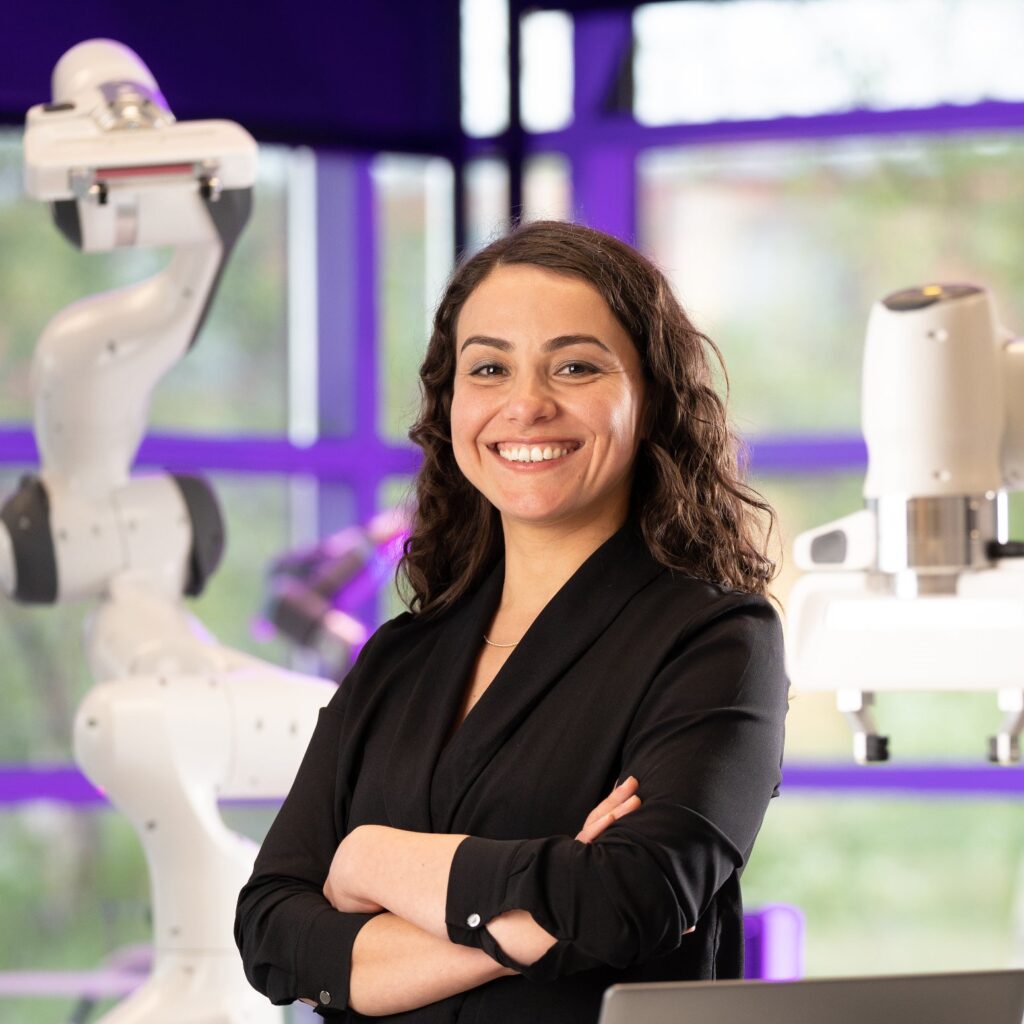
Senior Technical Specialist
Simon is working in the University of Nottingham’ Cobot Maker Space and the School of Computer Science. Within his role, he works alongside academics supporting Robotic related teaching and research activities. Research interests include utilising smart-sensing devices for rehabilitation, robotic teleoperation, and mobile robotics.
Richard Ramchurn
Artist/Researcher
Richard is known for his work at the intersection of adaptive storytelling, AI, and interactive media. His practice explores innovative ways to engage audiences through emerging technologies, often focusing on the relationships between human perception, agency, and narrative flow. With a background that spans film, neurocinematics, and interactive systems, Richard combines rigorous academic research with immersive artistic projects that push the boundaries of digital storytelling. He is particularly interested in the evolving dynamics between human and machine collaborators.
Rachael Garrett
PhD Student
Rachel is studying the intersection of design, ethics, and autonomous technologies. Her current research focuses on the felt and embodied practice of ethics within soma design, research through design and performance-led research approaches, as well as physical or proximate interactions with autonomous technologies such as machines, robots and aerial drones. During her PhD, she has developed theoretical tools and concepts for the qualitative analysis of ethical practice, and authored award-winning research papers for top-tier human-computer interaction venues such as ACM CHI and DIS. Rachael’s work combines analytic creativity, critical feminist perspectives, and qualitative research methods to construct new ways of understanding our relationships with intelligent technologies and how we can reimagine the ways that humans and technologies share our world. She is currently completing her PhD at KTH Royal Institute of Technology, Stockholm.
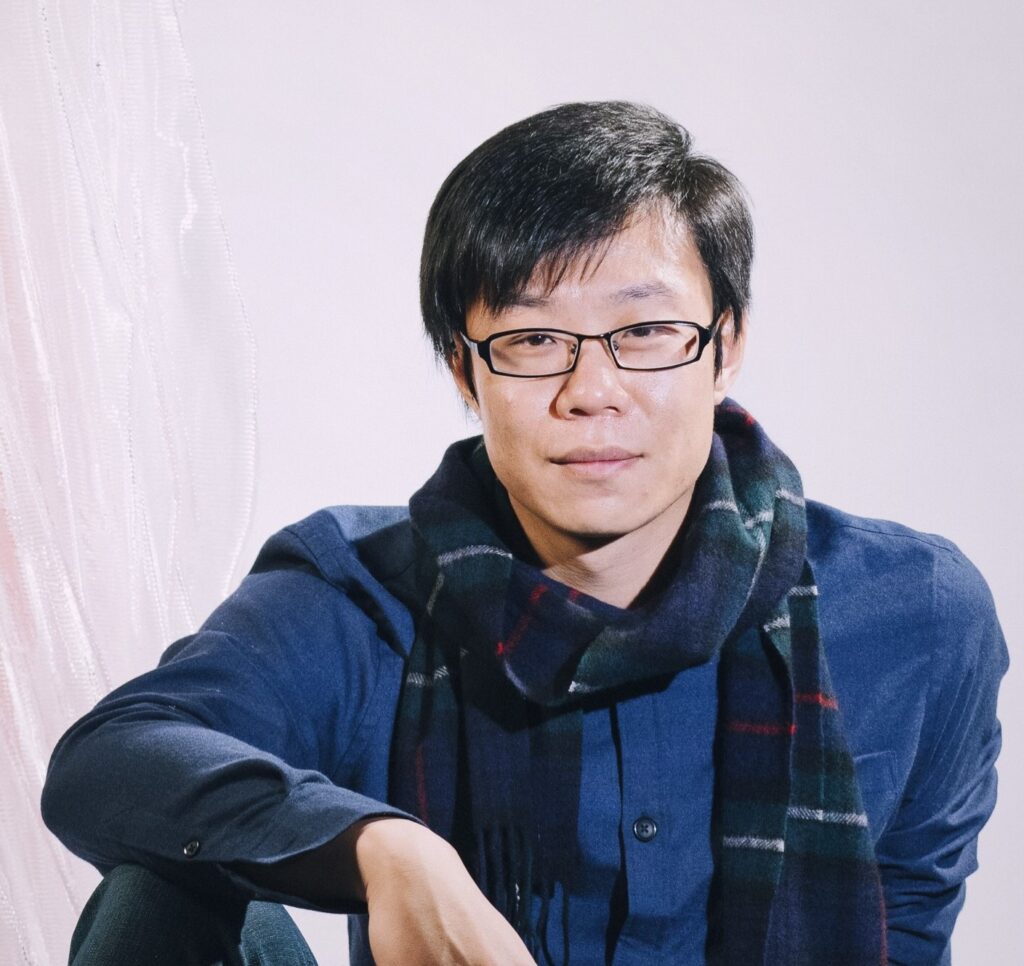
Feng Zhou
Research Fellow
Armed with a PhD in Computer Science with a specialization in additive manufacturing, Feng’s work seamlessly integrates the realms of academic research and applied technology across disciplines such as robotics and generative design. Beyond industrial applications, his collaborations with artists and architects have gained exhibition exposure, while his initiatives in HCI and HRI break new ground.Angela Higgins
PhD Student
Angela's research explores the lived experiences of older adults to imagine future robotic technologies that physically engage with the body. Drawing on her expertise as a product designer, she employs creative and embodied participatory design methods to co-create devices that are not only functional and useful but also desirable. She imagines a future where technology integrates effortlessly into our lives and bodies, developing robots that enhance health and well-being.
Dominic Price
Computer Science Research Fellow
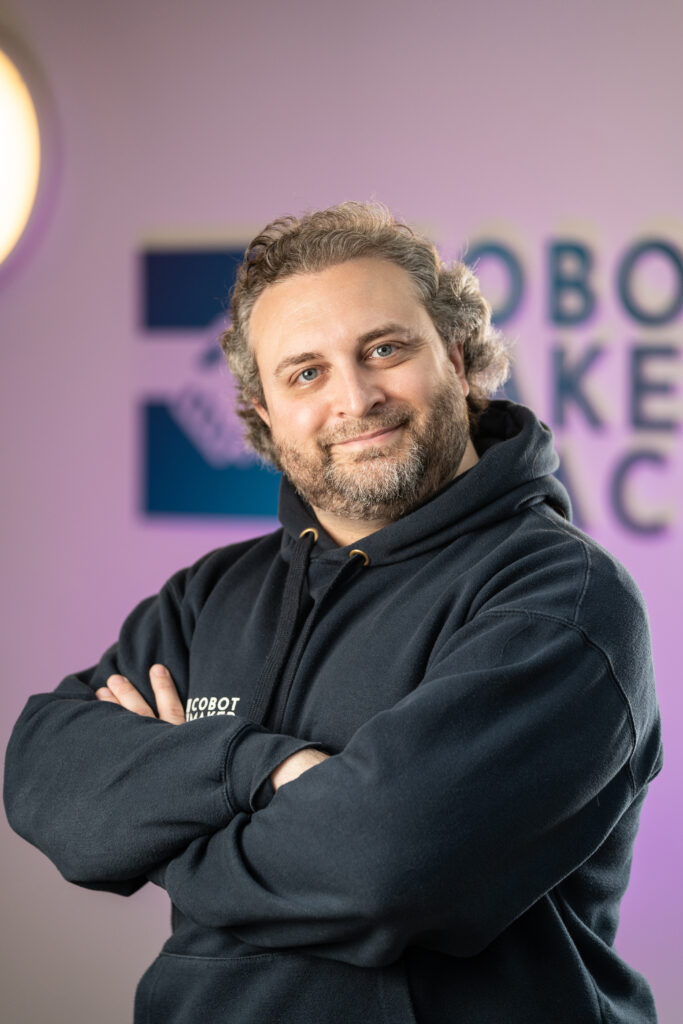
Dominic's expertise lies in research software engineering to support human-computer and human-robot interaction. He has worked across number of Programmes during his years in academic research, including Horizon Digital Economy Research, the Trustworthy Autonomous Systems Hub, the RAi UK and the Somabotics: Creatively Embodying AI Fellowship. Dominic is Lab Manager for the Cobot Maker Space and responsible for day to day running of the state of art robotic facility based at the University of Nottingham


Operations

Ben Coomber
Head of Transformation
Ben supports a range of initiatives at the University of Nottingham, developing and shaping strategic programmes and managing complex projects including the Horizon Digital Economy Research Institute, Trustworthy Autonomous Systems Hub, and Responsible AI UK. He was part of the team that established the Cobot Maker Space for the Smart Products Beacon.Lynn Rees
Operations Manager
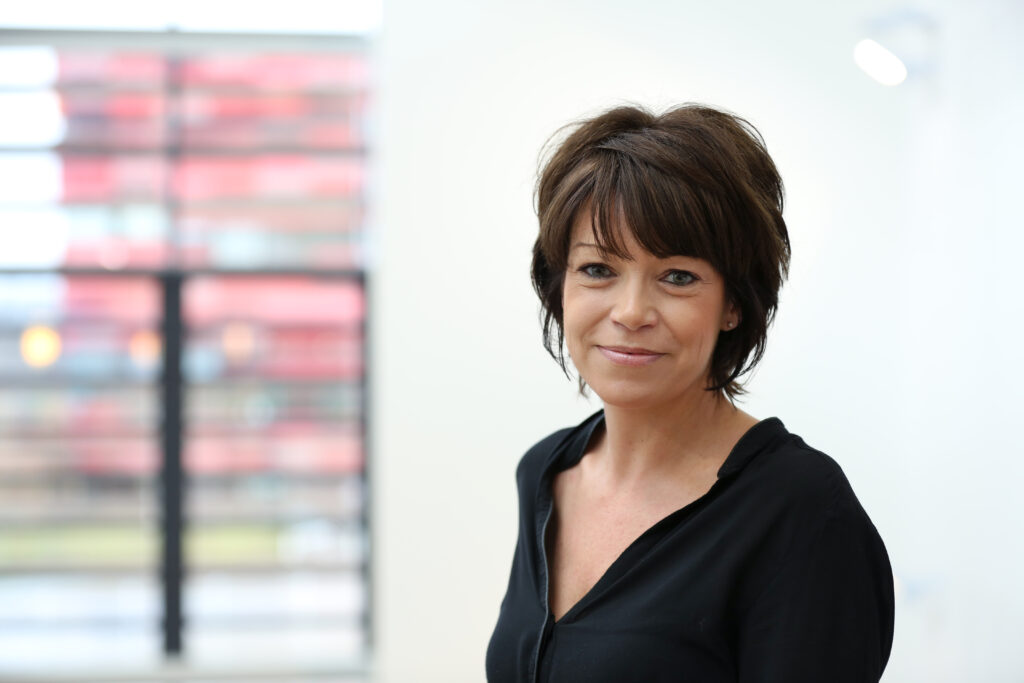
Lynn is Operations Manager at the EPSRC funded Horizon Digital Economy Research Institute. She also supports the operations of the Mixed Reality Lab, Trustworthy Autonomous Systems Hub, RAi UK, the Somabotics: Creatively Embodying AI Fellowship and the Cobot Maker Space.Hazel Sayers
Knowledge Exchange and Impact Officer
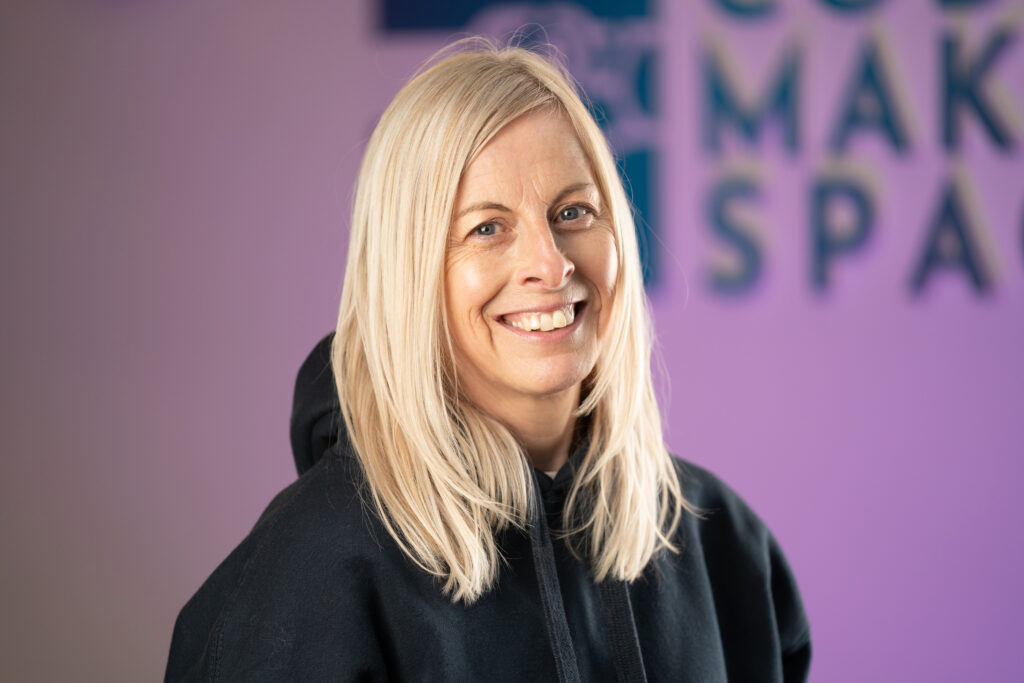
Hazel works with academics and researchers at the University of Nottingham to capture, record and promote research activity. In her present role, Hazel covers EPSRC-funded Horizon Digital Economy Research Institute, Somabotics: Creatively Embodying AI and the Cobot Maker Space, and Responsible Digital Futures group. She was previously Project Manager to the Stroke Theme within the Collaboration for Leadership in Applied Health Research and Care (CLAHRC) and Clinical Theme Co-ordinator to the Stroke Programme within the East Midlands Academic Health Science Network (EMAHSN).